
RV Carbon Monoxide Alarm Safety: Why You Should Never Disable It
A working RV carbon monoxide alarm can warn you about a gas you cannot see, smell, or taste. Learn why it must remain connected and what to do when it sounds.
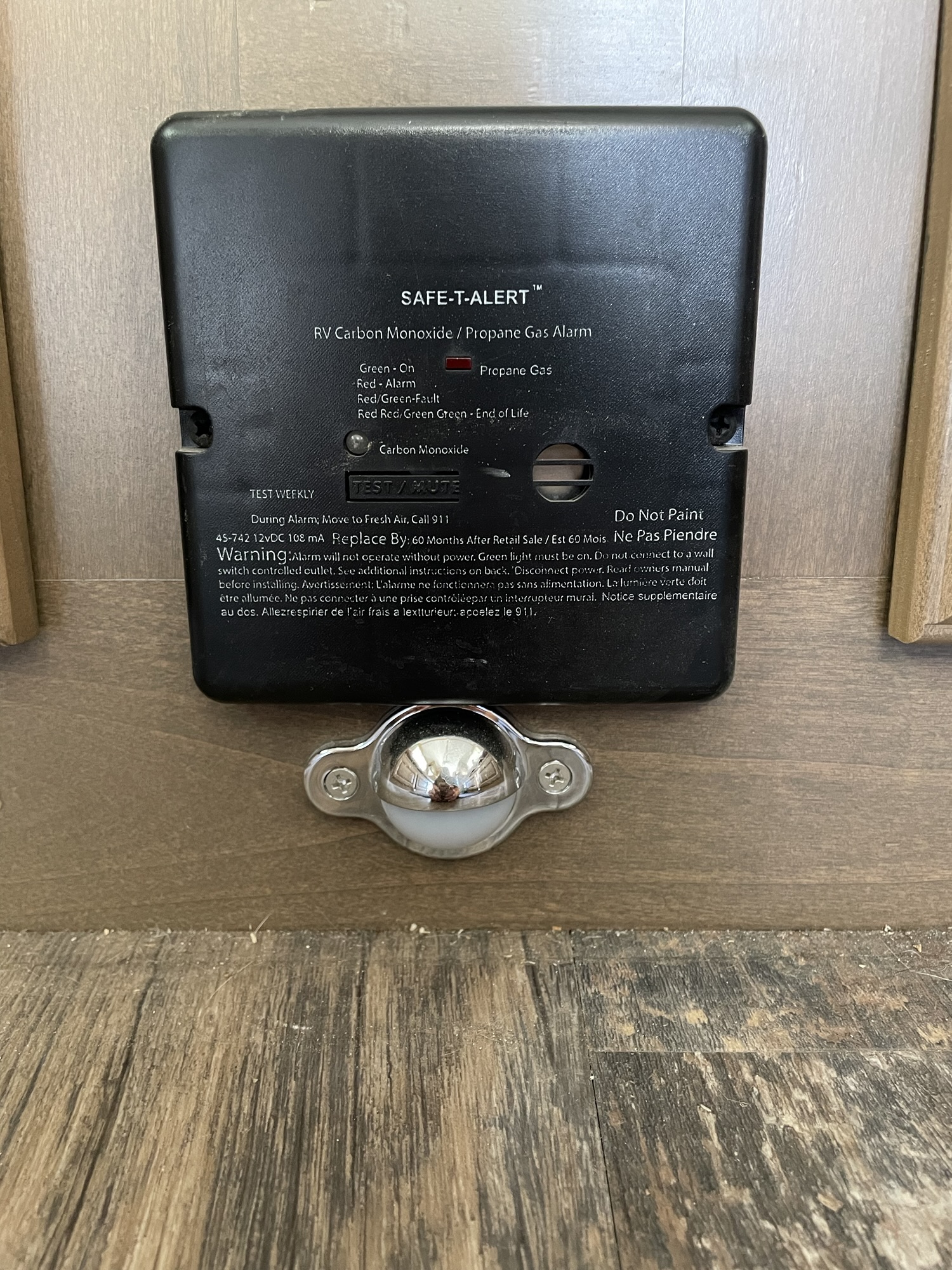
Important correction: This article concerns carbon monoxide (CO), not carbon dioxide (CO2). The RV life-safety device discussed below is a carbon monoxide alarm.
A carbon monoxide alarm is easy to overlook until it chirps or sounds unexpectedly. In an RV, however, disconnecting or covering that alarm can remove a critical warning against a gas you cannot see, smell, or taste. A working RV-rated CO alarm should remain powered, unobstructed, and ready to warn everyone inside.
Carbon monoxide is produced when fuel burns. In the compact interior of an RV, CO from an appliance, engine, generator, or nearby exhaust source can accumulate without an obvious warning. An alarm provides an essential layer of protection, but it does not replace correct appliance operation, ventilation, exhaust-system maintenance, or safe generator placement.
Why a working CO alarm is essential
Carbon monoxide interferes with the body’s ability to carry oxygen. Exposure can cause sudden illness, loss of consciousness, or death. People who are asleep may not notice symptoms before they are unable to respond.
The U.S. Consumer Product Safety Commission recommends CO alarms for recreational vehicles. The alarm is intended to warn occupants before the gas reaches a potentially life-threatening level, giving everyone time to leave and call for help.
Some RVs use a combination carbon monoxide and propane alarm. That unit monitors two separate hazards: carbon monoxide produced by combustion and unburned propane from a fuel leak. Both functions are important, and neither should be disabled.
Where carbon monoxide can come from
Any fuel-burning system can become a CO source when it is damaged, improperly used, poorly vented, or affected by an exhaust obstruction. Potential sources around a camper include:
- A furnace, water heater, refrigerator burner, range, or oven
- A portable generator or built-in generator
- The tow vehicle, motorhome engine, or another vehicle idling nearby
- A neighboring campsite’s generator or engine exhaust
- Portable heaters, grills, lanterns, or camp stoves used in an enclosed area
- Blocked, damaged, or poorly positioned exhaust outlets
Opening a window is not a dependable substitute for safe equipment use. Wind can direct outside exhaust toward a window, door, vent, slide-out, or other opening. Never use charcoal or fuel-burning camping equipment inside an RV unless the equipment is specifically designed, listed, installed, and operated for that enclosed application.
Why disconnecting the alarm is dangerous
An alarm that chirps, shows a fault, or activates unexpectedly needs attention. Disconnecting it removes the warning without resolving the reason it sounded. Do not cover the sensor, paint it, relocate it, or leave it without power.
A chirp may indicate low voltage, a fault, or the end of the alarm’s service life. An emergency alarm pattern can indicate detected carbon monoxide or propane. Indicator lights and sound patterns vary by model, so read the label and owner’s manual before a trip. Everyone who uses the RV should know the difference between an alarm, a trouble signal, and an end-of-life signal.
If nuisance signals continue, the answer is inspection and diagnosis—not permanent disconnection. The alarm, its power supply, nearby appliances, and exhaust systems may all need to be checked.
What to do if the CO alarm sounds
Treat an active CO alarm as an emergency. Do not stay inside to search for the source.
- Move everyone outside to fresh air immediately. Account for every person and pet.
- Call 911 or the local fire department from outside. Follow the directions of emergency responders.
- Do not re-enter the RV until emergency personnel say it is safe.
- Do not operate a suspected appliance or system again until it has been inspected and repaired by a qualified technician.
The CPSC advises occupants to move outside and call emergency services rather than attempting to locate the source themselves. Silencing or resetting an alarm does not prove the RV is safe.
Know the symptoms of CO poisoning
According to the Centers for Disease Control and Prevention, common symptoms include headache, dizziness, weakness, upset stomach, vomiting, chest pain, and confusion. Symptoms may resemble the flu, but CO poisoning does not produce a fever. A person who is asleep or impaired may lose consciousness before recognizing any warning signs.
If anyone may have been exposed, get to fresh air and call emergency services. Do not drive yourself for treatment if you are symptomatic. Symptoms are a reason to leave immediately even if the alarm has not activated.
Test and maintain the alarm
Use the testing schedule printed on the alarm and in its manual. The CPSC recommends testing CO alarms monthly, while some RV-specific combination alarms instruct owners to test more often. Follow the instructions for the unit installed in your RV.
- Press the test button according to the manufacturer’s procedure.
- Confirm the alarm has uninterrupted 12-volt power or a serviceable battery, depending on its design.
- Keep the face and sensor openings free of dust, paint, furniture, curtains, and stored gear.
- Learn the indicator lights and audible patterns before an emergency.
- Replace the unit when its end-of-life signal activates or at the interval specified on its label.
- Use a replacement listed and marked for recreational-vehicle use, installed according to its instructions.
The test button checks the alarm’s circuitry and audible warning; it is not a complete measurement of sensor accuracy. Never test an alarm with vehicle exhaust, a flame, or another improvised CO source.
Reduce the risk before every trip
Inspect fuel-burning appliances and exhaust systems as part of routine RV maintenance. Keep exterior vents and exhaust outlets clear of snow, nests, covers, mud, and stored equipment. Operate generators only outdoors in accordance with the generator manufacturer’s instructions, well away from doors, windows, vents, and neighboring camps. The National Fire Protection Association’s RV safety guidance also emphasizes maintaining a working CO alarm and watching for exhaust hazards.
Before sleeping in the RV, verify that the CO alarm shows normal operation. If it will not power on, will not pass its prescribed test, or displays a fault or end-of-life condition, replace or service it before occupying the RV.
Keep the warning in place
A working carbon monoxide alarm is a small device with a life-saving purpose. Keep it connected, test it as directed, replace it at the end of its rated life, and treat every emergency alarm as real.
If your RV’s alarm is chirping, showing a fault, or activating repeatedly, Peak Outdoors can inspect the alarm, its power supply, and potential appliance or exhaust-system sources. A life-safety warning should be diagnosed before the RV is used again.