
Wood‑Burning Stoves in Camp Trailers: Warmth, Tradition, and Craftsmanship
Discover how the tradition of wood heat, thoughtful design, and careful craftsmanship come together in a custom camp trailer.
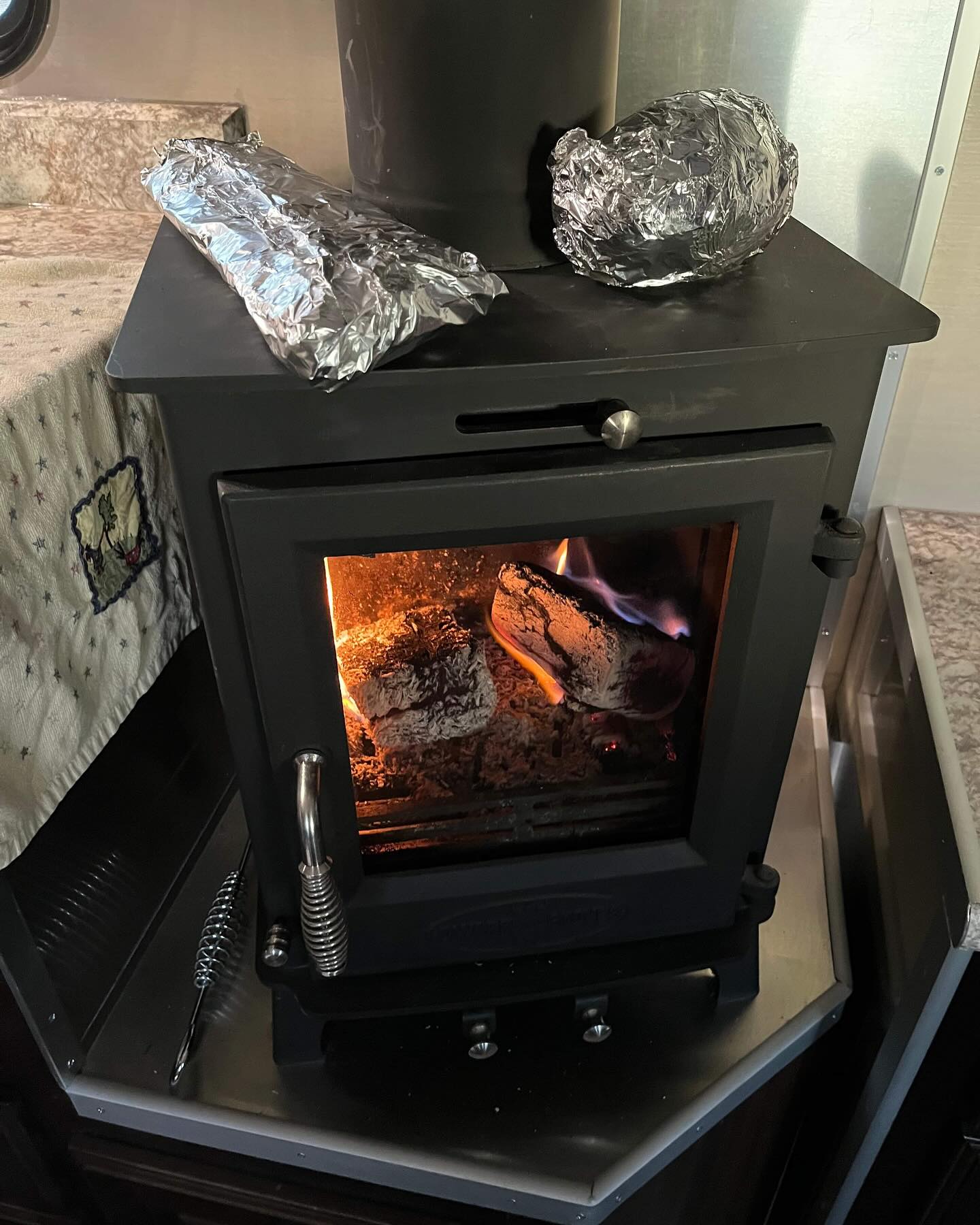
On a cold morning in the mountains, warmth inside a camp is more than a convenience. It creates a place to dry out, share a meal, plan the day, and reconnect after hours outside. That sense of warmth has deep roots in the sheep camps and sheepherders’ wagons that helped shape Peak Outdoors.
Wood-burning stoves have long served people working and living far from conventional utilities. Their steady radiant heat became part of daily life on the range—and part of the character of the camps themselves. Today, that tradition can still have a place in a carefully designed custom camp trailer.
Warmth with a history
Peak’s connection to wood heat is tied to the same central Utah communities where craftsmanship, resourcefulness, and neighborly support remain part of everyday life. During winter gatherings in Spring City, people come together around lights, food, conversation, and the glow of a shared fire. The warmth matters, but so does what it represents: reliability, welcome, and a reason to gather.
A wood stove brings that same feeling into a camp. Its heat is direct and tangible, and the ritual of tending a small fire can make a remote trailer feel grounded and familiar. For owners who spend time in cold, isolated country, that connection can be as meaningful as the temperature inside.
More than a source of heat
A compact wood stove can provide steady radiant warmth without depending on shore power. That makes it appealing for certain off-grid trips, working camps, and cold-weather stays. It can also become a natural focal point in the interior: a place to warm up, slow down, and settle in for the evening.
That does not mean a wood stove is the right choice for every owner or every destination. It requires planning, appropriate fuel, routine attention, and responsible operation. The best heating system is the one that matches how and where the camp will actually be used.
Designed into the camp from the beginning
In a compact trailer, a solid-fuel appliance cannot be treated as an afterthought. The stove, hearth, heat shielding, clearances, stovepipe, roof penetration, ventilation, storage, and surrounding floor plan need to work together as one system.
That is why the conversation should begin during the design process. Peak can consider the owner’s intended climate, trip length, available space, preferred layout, and heating expectations before the camp is built. Integrating the feature from the beginning protects usable space and allows the surrounding materials and components to be planned around the installation requirements.
Craftsmanship you can see
A well-built camp reveals its quality in the details: solid cabinetry, durable surfaces, serviceable systems, secure hardware, and components selected for real travel. A wood-stove installation should reflect that same standard. It should look intentional because it was intentional—not simply added after the rest of the trailer was finished.
That approach carries forward the values behind the traditional range camp. Build for the conditions. Use materials responsibly. Make every component earn its place. Create something dependable enough to serve today and durable enough to be part of the next generation’s stories.
Safety comes first: A wood stove should never be used as a portable add-on inside a camp trailer. Use only an appliance and venting system appropriate for the application, installed by qualified professionals in accordance with the stove, chimney, and trailer manufacturers’ requirements. Maintain required clearances and heat protection, keep the venting system inspected and clean, and use working smoke and carbon-monoxide alarms. Never disable an alarm. Follow all campground rules, local fire restrictions, and burn bans. If an alarm sounds or anyone experiences possible carbon-monoxide symptoms, leave the trailer immediately and call emergency services.
A camp that feels like home
Peak Outdoors builds custom camps around the people who will use them. For some owners, that means a modern electrical system and familiar RV conveniences. For others, it also means the enduring warmth of a small wood fire and a direct connection to generations of life on the range.
The goal is not to recreate the past. It is to carry its best qualities forward: practical design, honest materials, careful craftsmanship, and a space where people feel welcome. A thoughtfully designed wood-stove camp can provide all four.
Interested in including a wood-burning stove in a custom camp? Talk with Peak early in the design process so the heating system, layout, and intended use can be considered together.
Comments
Have a question or something useful to add? Share it with other Peak Outdoors readers.